

A self-reflection tool for understanding anxiety and building intentional resilience through logotherapy, CBT, DBT, and existential therapy
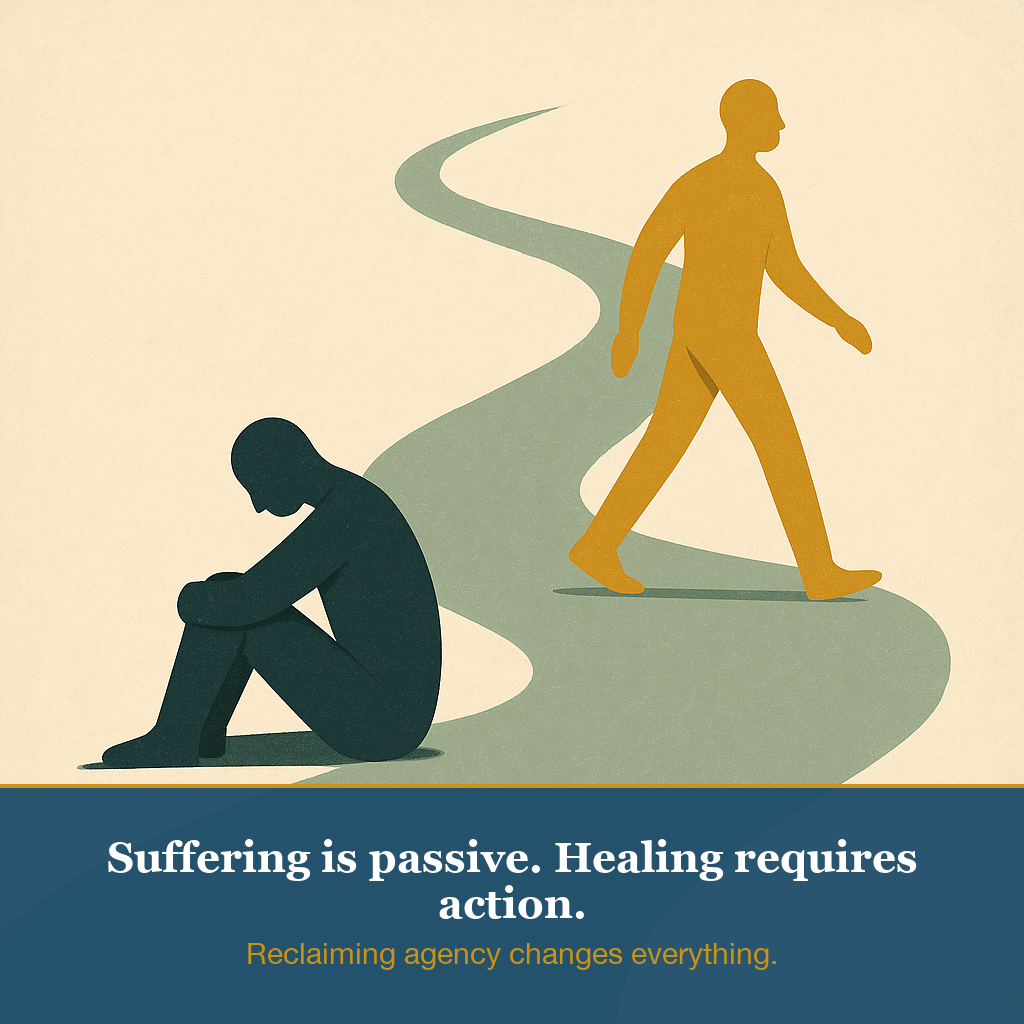
Anxiety often feels like something that happens to us. But what if you could shift from reacting to life to actively engaging with it—and even finding meaning in it?
This guided worksheet helps you explore the difference between passive challenges (stressors you didn’t choose) and active challenges (stressors you choose to face). It also integrates Viktor Frankl’s logotherapy, which teaches that meaning can be discovered even in suffering, and that intentional action can transform anxiety into purpose.
This tool draws from:
• 🧠 Cognitive Behavioral Therapy (CBT): Identifying and reframing unhelpful thought patterns
• 💬 Dialectical Behavior Therapy (DBT): Building distress tolerance and emotional regulation
• 🌱 Existential Therapy & Logotherapy: Finding meaning through choice, values, and attitude
Passive Challenges
These are stressors or difficulties that happen to the client—external circumstances or internal experiences they didn’t choose. They often feel uncontrollable or overwhelming.
Examples:
• Receiving unexpected criticism
• Experiencing intrusive thoughts
• Facing a medical diagnosis
• Being stuck in traffic
• Feeling anxious in social situations
Passive challenges often trigger helplessness, avoidance, or rumination. They’re part of life—but when they dominate, clients may feel disempowered.
Active Challenges
These are stressors the client chooses to face—intentional efforts to grow, confront fears, or pursue goals. They involve stepping toward discomfort with purpose.
Examples:
• Initiating a difficult conversation
• Practicing exposure to feared situations
• Setting boundaries
• Trying a new coping skill
• Attending therapy
Active challenges build resilience, confidence, and self-efficacy. They shift the client from avoidance to engagement.
CBT lens: Passive challenges often trigger automatic thoughts and avoidance.
DBT lens: Active challenges build emotional regulation through opposite action.
Logotherapy lens: Meaning can be found in how you respond to both types of challenge
✍️ Your Personal Challenge Map
Reflect on recent challenges. Label each as passive or active, and note how they made you feel.
| Challenge Description | Passive or Active | Emotional Impact | Avoided or Engaged |
| Ex: Feeling anxious before a meeting | Passive | Nervous, helpless | Avoided |
| Ex: Volunteering to lead the meeting | Active | Anxious but proud | Engaged |
🔍 What’s Your Current Ratio?
• Passive challenges: ___
• Active challenges: ___
Reflection Questions:
• What do you notice about the balance?
• How does this ratio affect your anxiety, mood, and sense of control?
• Are there areas of life where passive challenges dominate?
Write a few sentences or discuss in session.
🔄 Transforming Passive into Active
Choose two passive challenges and brainstorm how you could turn them into active ones.
| Passive Challenge | Possible Active Response | What Would That Feel Like? |
| Ex: Avoiding social events | Attend one for 30 minutes | Nervous but proud |
CBT Tip: Challenge the thought: “I can’t handle this.”
DBT Tip: Use opposite action—do the opposite of what anxiety tells you.
Logotherapy Tip: Ask: “What value could I express by facing this?”
🗓️ Weekly Commitment
This week, choose one active challenge to face intentionally.
• 🧠 Challenge: __________________________________________
• 📍 When/Where: _________________________________________
• 💬 Support I need: ______________________________________
• 🧘 How I’ll care for myself afterward: _______________________
🪞 End-of-Week Reflection
After facing your challenge, take a moment to reflect:
• What did I learn about myself?
• How did facing this challenge affect my anxiety?
• What surprised me?
• What would I do differently next time?
Write freely or bring your insights to therapy.
🧠 Viktor Frankl’s Meaning-Based Tools
1. 🗣️ Socratic Dialogue: Discovering Meaning Through Questions
Frankl used gentle, curious questioning to help clients uncover meaning. Try these prompts:
• What does this challenge ask of me?
• What value could I express by facing it?
• If I were advising a friend in this situation, what would I say?
• What kind of person do I want to be in this moment?
Exercise:
Choose one challenge and journal your answers to the questions above.
Then ask: “What is one small action I can take that reflects this meaning?”
2. 🎯 Dereflection: Shifting Attention Away from Anxiety
Dereflection is a technique that shifts a person’s focus away from self-absorption, obsessive thoughts, or a particular problem towards something more meaningful and value-driven. It involves moving from self observation to self transcendence, where one “loses oneself” by focusing on the task at hand, another person, or a higher purpose, thereby finding oneself and achieving a more balanced perspective on life.
When to use it:
• You’re stuck in rumination or hyper-focus on symptoms
• You feel paralyzed by anxiety or perfectionism
Exercise:
• Identify one moment this week when you felt stuck in anxious self-focus.
• Choose a small task that serves someone else or expresses a value (e.g., helping a friend, creating something, learning).
• Do it mindfully, focusing on the task—not your symptoms.
Reflection Prompt:
How did shifting focus affect your anxiety and sense of purpose?
3. 🤹 Paradoxical Intention: Playfully Facing Fear
Frankl taught clients to intentionally exaggerate their feared symptoms with humor and detachment. This breaks the cycle of anticipatory anxiety.
When to use it:
• You fear blushing, stammering, sweating, or panicking
• You avoid situations due to fear of symptoms
Exercise:
• Choose one fear you usually avoid (e.g., “I’ll stammer during introductions”)
• Practice saying: “I hope I stammer wonderfully today!” or “Let’s see how red I can turn!”
• Try this in a safe, low-stakes situation
Reflection Prompt:
What happened when you leaned into the fear?
Did humor or exaggeration reduce its grip?
🗓️ Weekly Commitment
This week, choose one active challenge and one meaning-based action.
• 🧠 Active Challenge: __________________________________________
• 🌱 Meaning-Based Action (Socratic, Dereflection, or Paradoxical Intention): __________________________________________
• 📍 When/Where: _________________________________________
• 💬 Support I need: ______________________________________
• 🧘 How I’ll care for myself afterward: _______________________
🪞 End-of-Week Reflection
After facing your challenge, take a moment to reflect:
• What did I learn about myself?
• How did facing this challenge affect my anxiety?
• What surprised me?
• What value did I express through this action?
Write freely or bring your insights to therapy.
💡 Final Thought
You don’t have to eliminate anxiety to live meaningfully.
You just have to choose—again and again—to engage with life on purpose.
As Viktor Frankl wrote:
“Life is never made unbearable by circumstances, but only by lack of meaning and purpose.”
