
Anxiety isn’t a character flaw — it’s an old survival system doing its job a little too well. This guide walks through how irrational fear develops, and how Exposure Therapy — the most empirically supported behavioral treatment for anxiety — helps you retrain your nervous system, challenge the beliefs underneath the fear, and slowly expand the life you’re willing to live. It closes with a practical Exposure Therapy Strategy Worksheet you can use with your therapist.
How Irrational Fear and Anxiety Develops
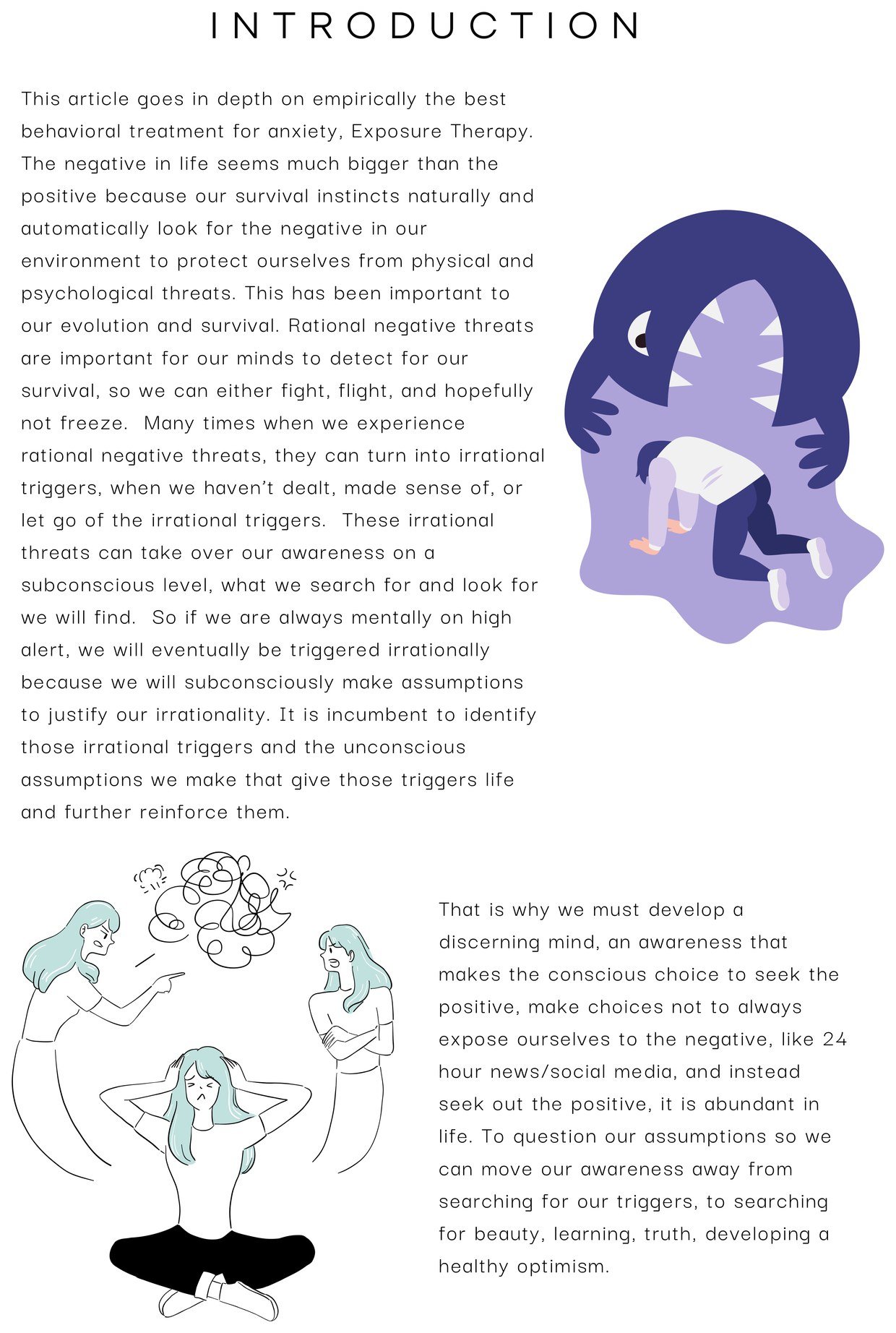
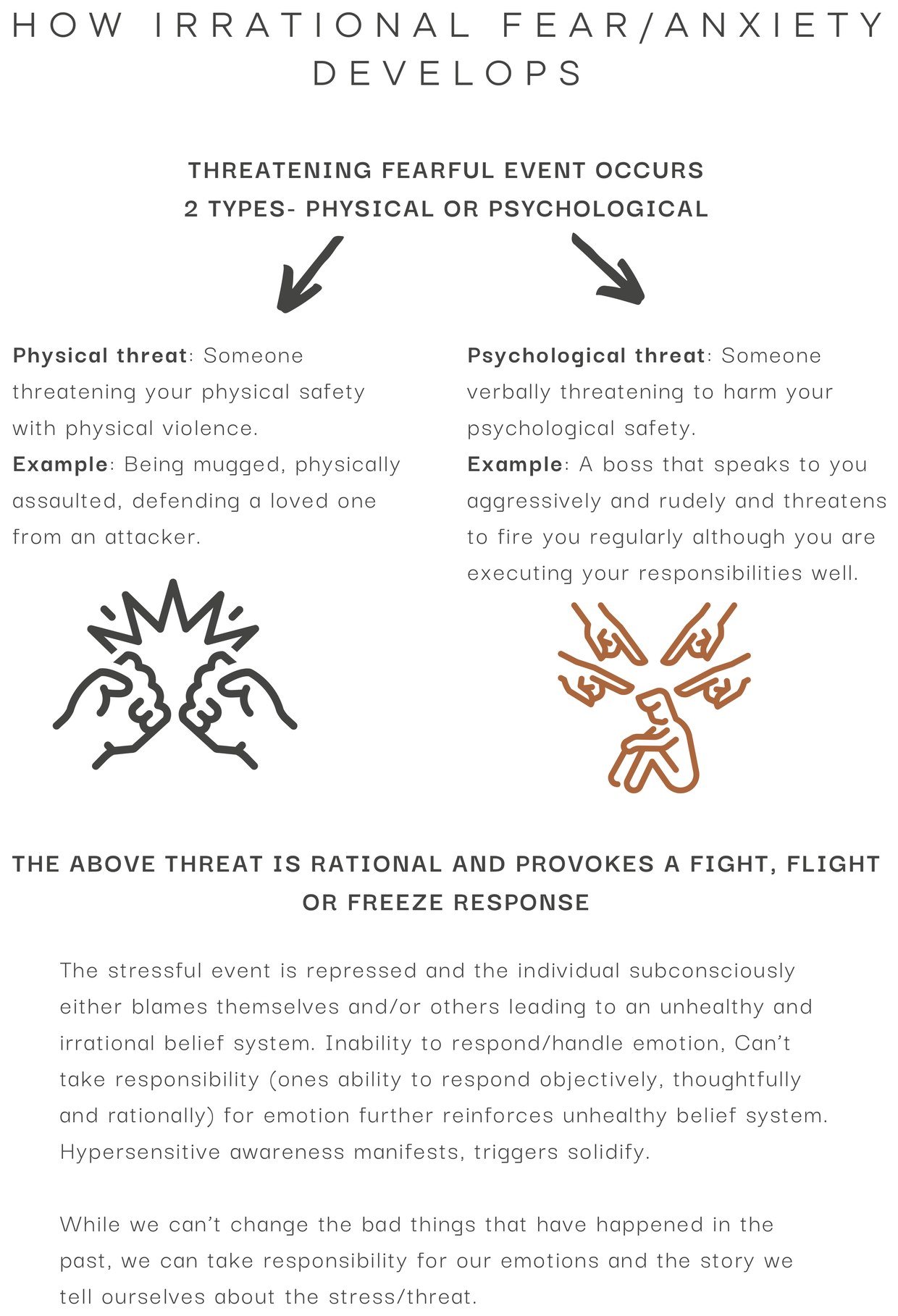
Your nervous system was built to keep you alive, not comfortable. It evolved to react to physical threats — a predator, a fall, a fire — with the fight-flight-freeze response. The problem is that the same system fires for psychological threats too: a difficult email, a memory, a “what if” that hasn’t happened yet. The body can’t tell the difference between a real danger and an imagined one, so it treats both as emergencies.
Over time, if a fear goes unexamined, the mind builds a belief system around it — “crowds aren’t safe,” “I can’t handle uncertainty,” “if I feel anxious, something is wrong with me.” Those beliefs get reinforced every time you avoid the thing you fear. Avoidance feels like relief in the moment, but it quietly teaches the brain that the threat was real all along. That’s how a manageable worry hardens into irrational, life-narrowing anxiety.
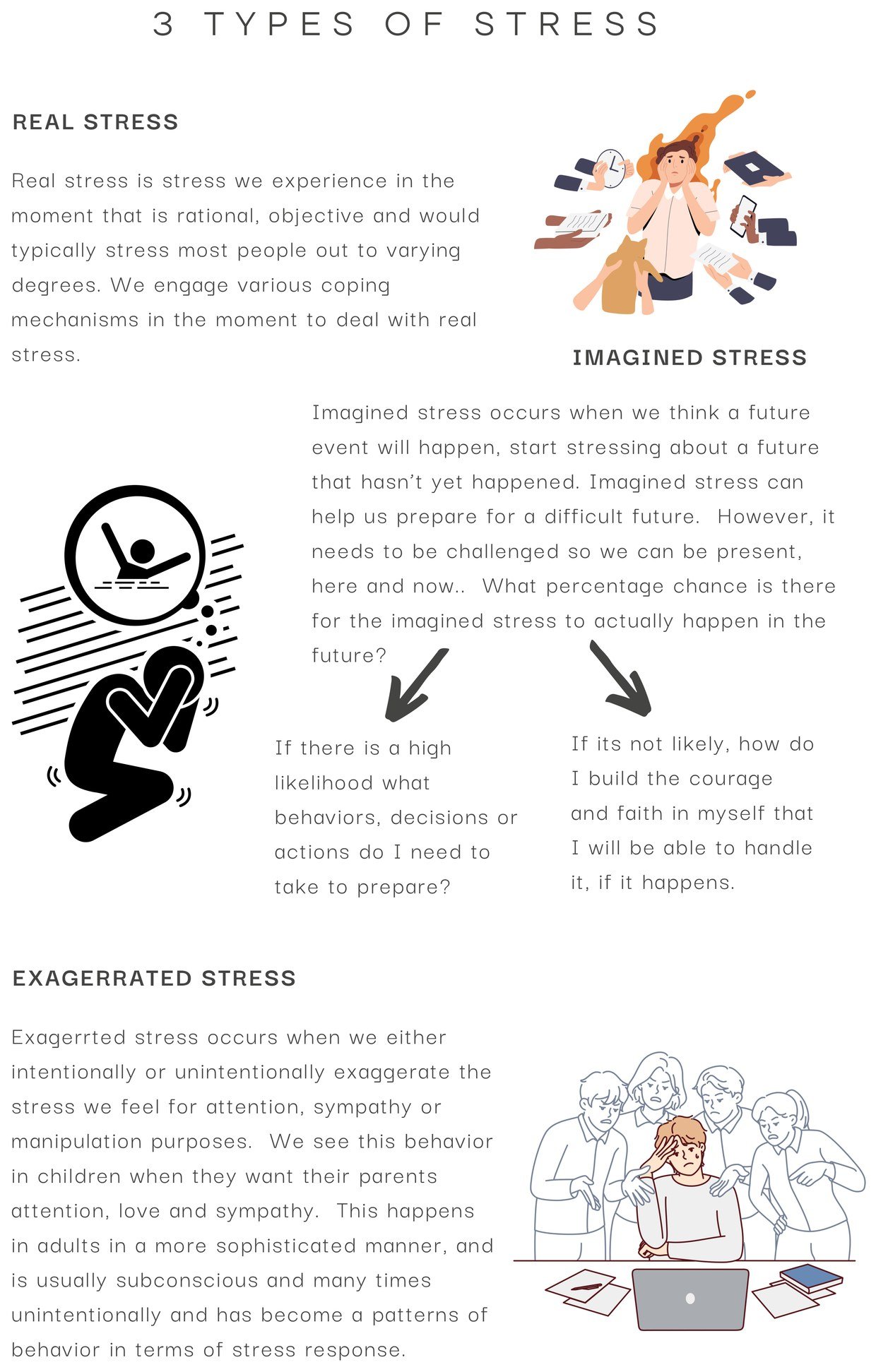
The Three Types of Stress
Not all stress is the same, and treating it as one thing keeps people stuck. In my clinical practice I find it useful to separate three kinds. Real stress is a genuine, present threat that calls for action — the response is appropriate and proportionate. Exaggerated stress is a real situation your mind has inflated well beyond its actual size. Imagined stress is a threat that isn’t happening at all — it lives entirely in the anticipation of something that may never come. Learning to name which one you’re in is the first move toward responding instead of reacting.
How Exposure Therapy Retrains the Nervous System
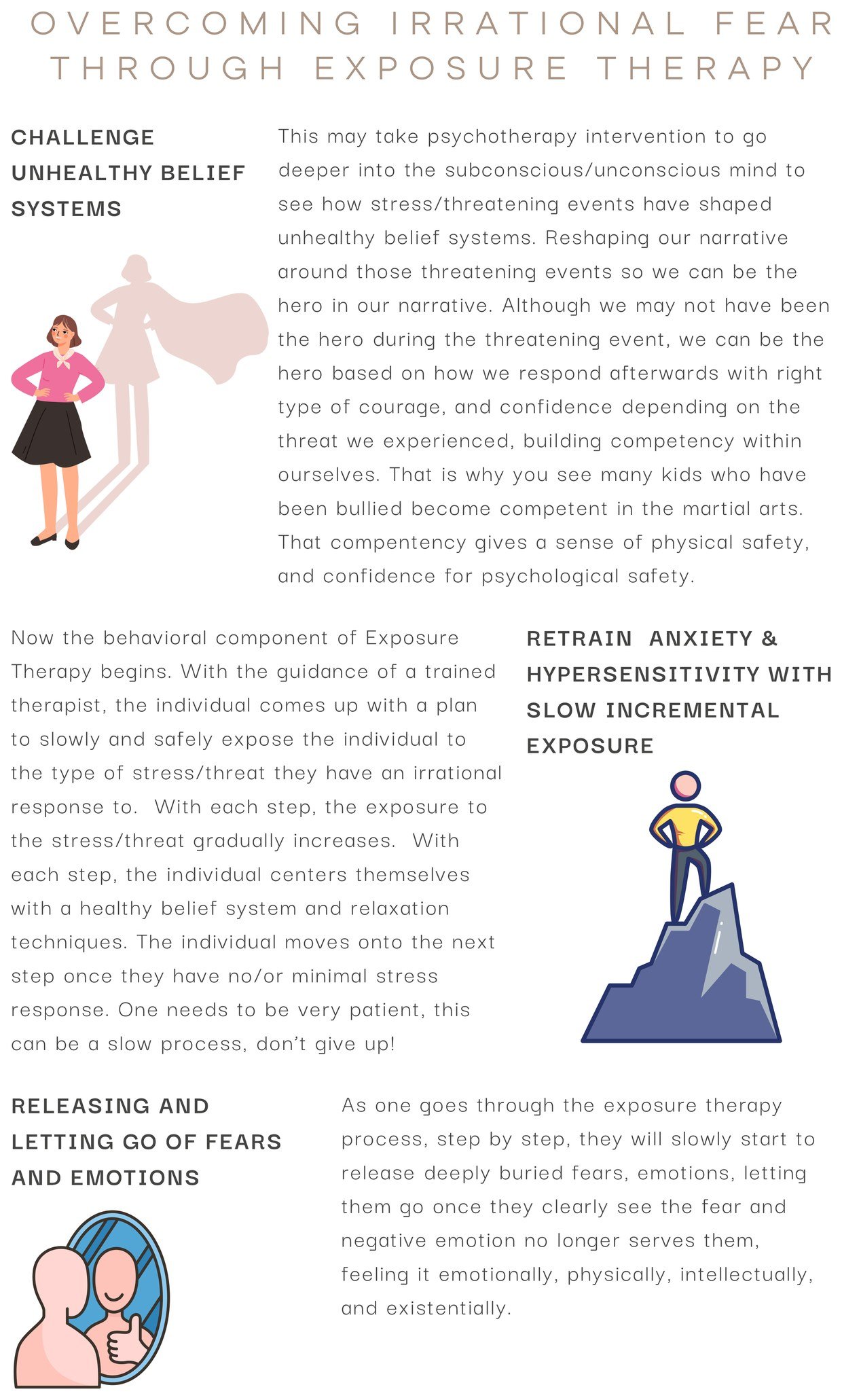
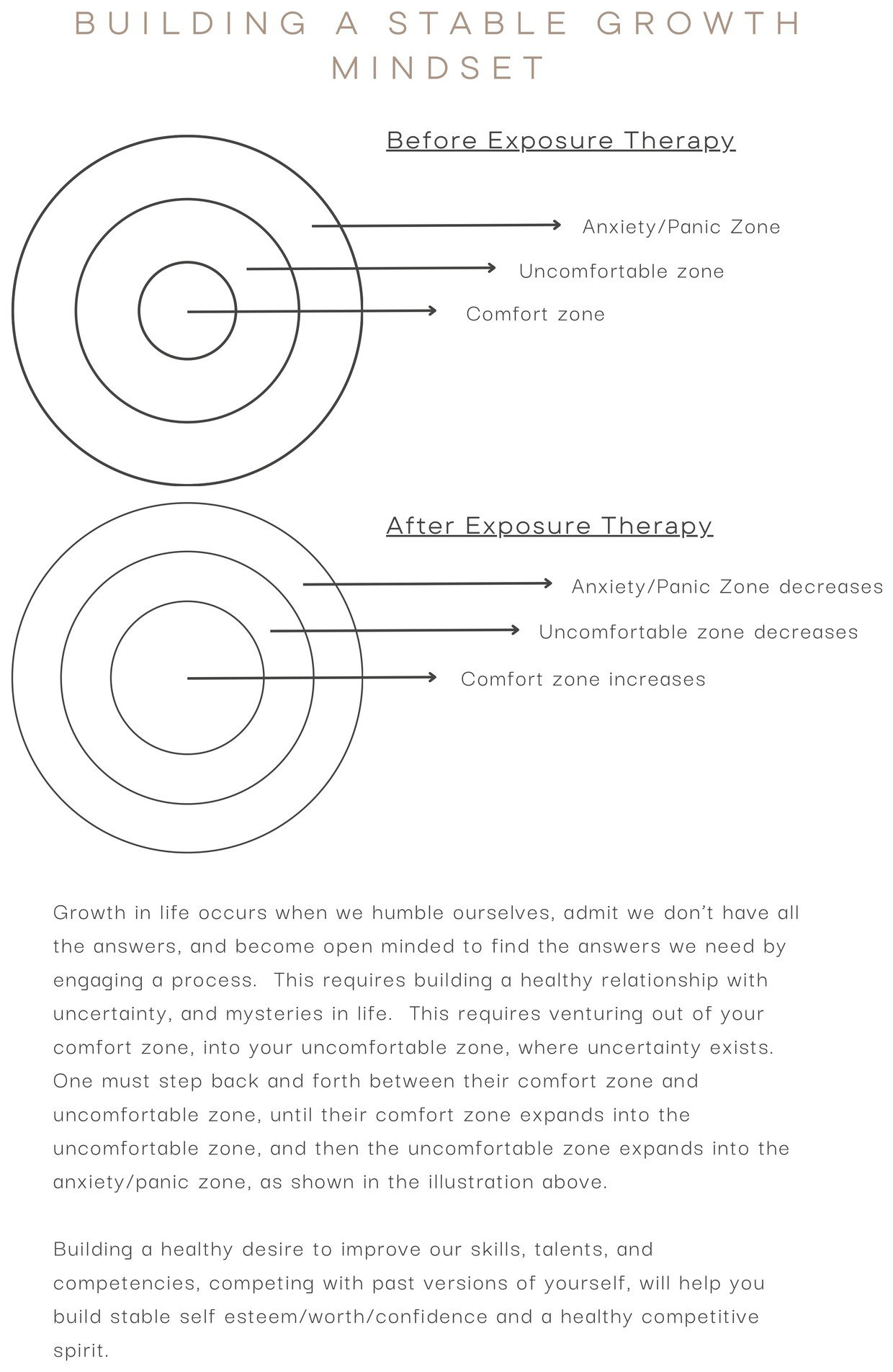
Exposure Therapy works by doing the one thing anxiety demands you never do: approaching the feared situation on purpose, in small, tolerable steps. Instead of avoiding, you stay with the discomfort long enough for the alarm to settle on its own. Each time you do this, the nervous system gathers new evidence — that the feared outcome didn’t happen, or that you survived it — and the fear response gradually loses its grip. This is called habituation, and it’s why exposure is the most empirically supported behavioral treatment for anxiety.
Done well, exposure isn’t about forcing yourself through panic. It’s a graded, collaborative plan built with your therapist, moving from the least frightening version of a situation toward the more challenging ones only as your confidence grows. Alongside the exposure work, we challenge the belief system underneath the fear, so you’re not just tolerating anxiety — you’re dismantling the story that keeps generating it.
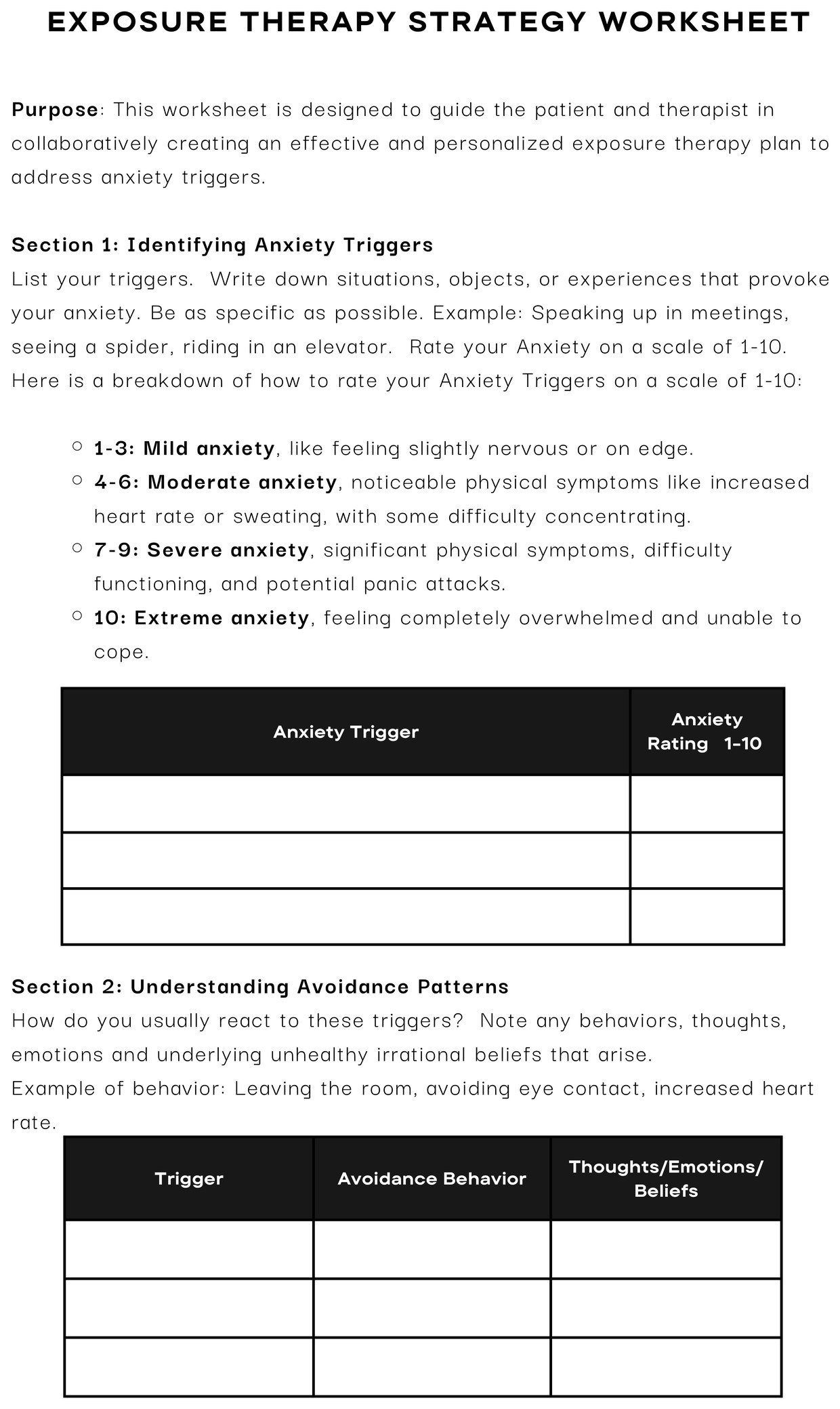
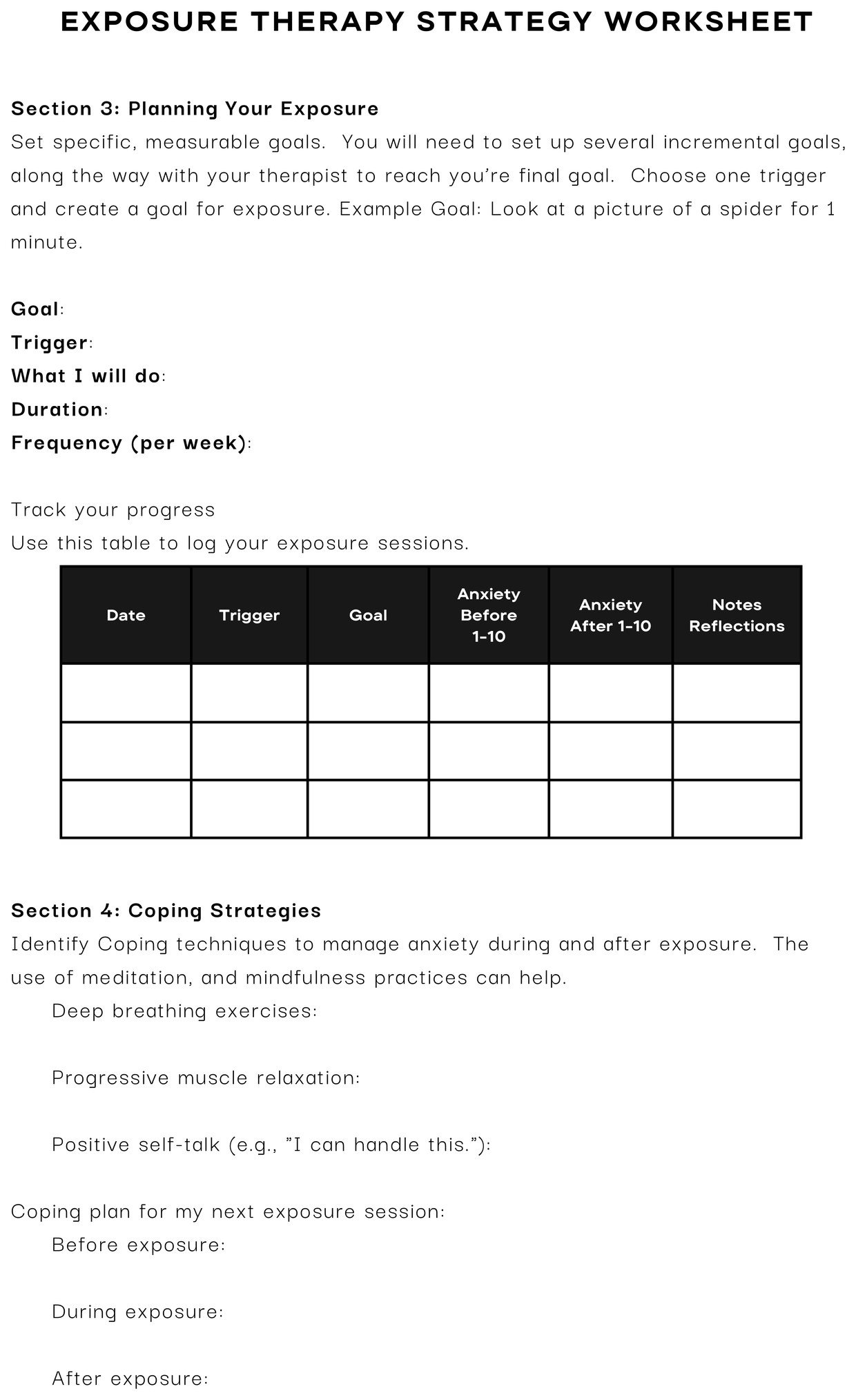
Using the Exposure Therapy Worksheet
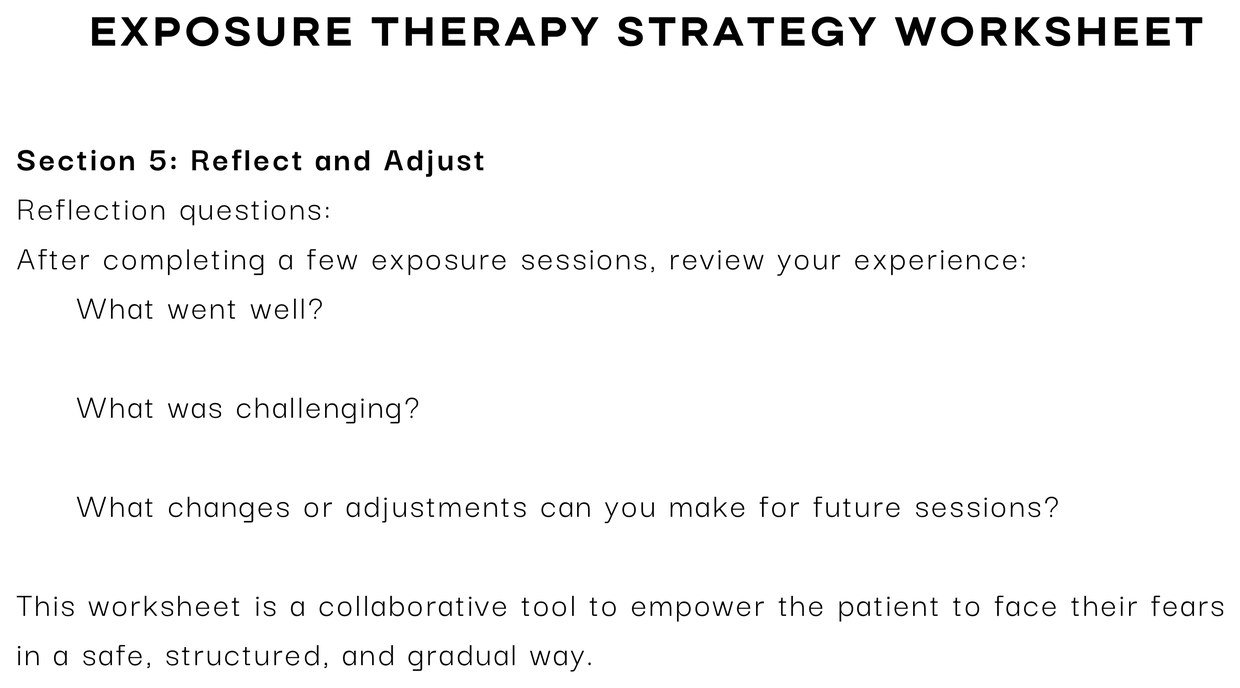
The worksheet above is designed to be used with a therapist, not alone. It walks you through identifying your specific triggers, recognizing the avoidance patterns that keep the fear alive, planning a gradual exposure, tracking what actually happens versus what you predicted, and reflecting afterward so each session builds on the last. That feedback loop — predict, approach, observe, adjust — is what turns exposure from a one-time act of courage into lasting change.
Exposure Therapy works best with the guidance of a trained therapist who can help you build a safe, gradual plan. If anxiety or irrational fear is narrowing your life, I work with clients in Houston and across Texas to do exactly this kind of work.
Book a consultation with Being Counseling →
